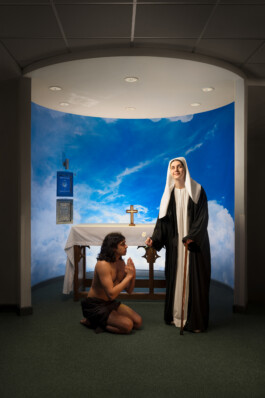
Third Eye (2021)
Fascinated by the mysterious nature of intuition, thinking, and decision-making, this work was created through the playful spark of sudden inspiration. With a spare hour in a hotel room after a photoshoot, I let my creativity flow in a spontaneous attempt to capture something unexpectedly interesting, using my body and the ambient light as the building materials of the composition. Undressed into sensuality and vulnerability in front of the camera, I found myself in the simple process of being fully present and letting go of any need for control.
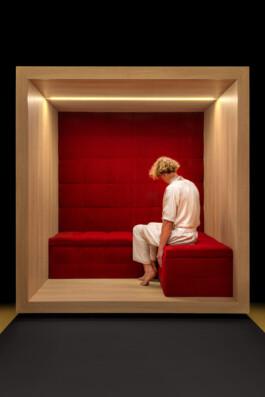
Crying Man (2020)
Created in response to the enduring stigma surrounding male vulnerability, Crying Man explores tears as an expression of strength rather than weakness. The work reflects on the social expectations that often discourage men from openly expressing emotion, questioning the belief that vulnerability diminishes masculinity. Instead, it presents crying as a deeply human act of release, one that allows emotional burdens to surface, making space for healing, resilience, and personal growth. By embracing rather than suppressing difficult emotions, the work suggests that true strength lies not in emotional restraint, but in the courage to confront oneself with honesty and openness.

The Birth of Venus (2023)
Inspired by Botticelli's iconic painting, The Birth of Venus attempts to portray a contemporary version of the figure emerging from the bath after a relaxing soak. Lying in warm water is one of the few daily activities that allows us to fully decompress in our own presence, without distractions from the virtual or outside world. This simple process of purification serves as a catalyst for a feeling of renewal and rebirth, themes closely associated with the famous painting.

The Saint (2023)
Pregnancy is a unique chapter in a woman's life, and I have always wondered how profoundly transformative the experience of growing another human being within your own body must be. A woman becomes a portal through which a new life enters the world, taking on the lifelong responsibility of nurturing, guiding, and shaping another person from their very first day. Imagining such an immense, and in many ways self-sacrificing role, I cannot help but see every mother as a saint.
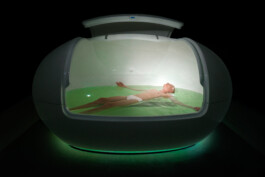
Lost and Found (2021)
Lost and Found is a silent exploration of consciousness through the experience of entering a sensory deprivation tank, a method developed by physician and psychoanalyst John C. Lilly. Despite being considered a spa treatment and commonly associated with relaxation, the absence of external stimulation can amplify the inner world, allowing suppressed thoughts and emotions to emerge with unexpected clarity. Immersed in darkness and silence, the body appears to float in an endless void, creating a striking parallel with the experience of drifting through outer space. It is within this suspended state, where distraction disappears and perception begins to shift, that becoming lost transforms into an opportunity for deeper self-discovery and reflection.
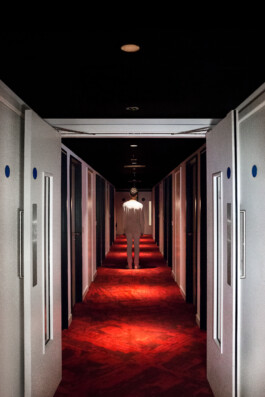
In Between (2017)
This work explores consciousness through a staged composition in which space and time remain deliberately undefined. A solitary figure stands within a corridor representing the countless choices, uncertainties, and turning points that shape our lives. Each doorway suggests a different path, while the destination remains unknown. The image reflects a private encounter with one's inner self, a place where thoughts and emotions emerge in silence. In this suspended state, little remains beyond the present moment, allowing space for deeper reflection.
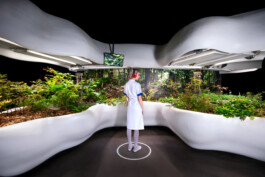
Laboratory of Silence (2019)
The constant presence of noise, and its often overlooked impact on the human mind, forms the foundation of this work. The ear never truly rests, continuously absorbing the sounds that shape our daily experience, even when they pass unnoticed. As the pace of contemporary life accelerates, moments of genuine stillness become increasingly rare and deeply sought after. This work imagines silence not as the absence of sound, but as a space for restoration, inviting the viewer to step away from external distractions, reconnect with the present moment, and return to a quieter state of awareness.
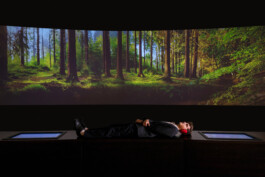
Spaceship Receptionist (2019)
The work imagines the psychological experience of life aboard a spacecraft, where the familiar rhythms of the natural world are replaced by the controlled environment of a machine. Removed from fresh air, changing seasons, and the everyday presence of nature, the work reflects on the inherent bond between human beings and the natural world on Earth, a connection that often becomes most apparent only in its absence.
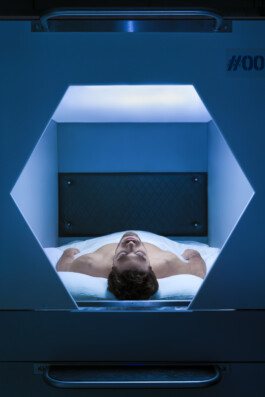
In Limbo (2025)
This image captures the unsettling paralysis of feeling lost in the passage of time - burnt out, disconnected, and trapped in repeating cycles, where moving forward feels almost impossible. The figure lies still, yet his vacant gaze appears uncanny, almost alien. This is a portrait of inner restlessness: a longing for more suspended in silence, the unbearable gap between who we are and who we wish to be.
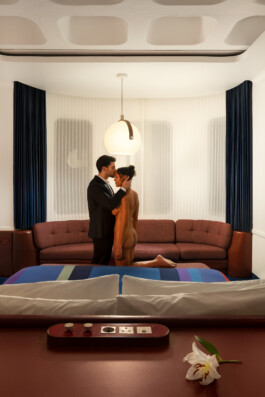
Lily (Respect / Consent) (2024)
The work explores a delicate interplay of power and vulnerability within the context of an intimate relationship. A man's kiss on a woman's forehead signifies an act of reverence - honouring her presence beyond desire and possession. In contrast to his formal attire, her nudity exudes both surrender and liberation, a raw expression of unguarded devotion. The viewer is invited to perceive intimacy as not just passionate but profoundly respectful. A silent, intentional dialogue between two people is defined by a purity of mutual trust and unspoken understanding.

Margaret (Mercy) (2026)
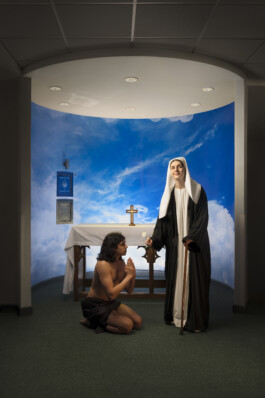
This image is inspired by the story of Saint Margaret of Castello, an Italian saint who was blind from birth. Abandoned by her parents, Margaret devoted her life to helping the poor, the weak, and prisoners. This work depicts Margaret in the moment of mercy given to a prisoner kneeling and praying in front of her. The central idea of the image explores the contrast between physical and spiritual sight. Margaret, though blind, possesses a deeper spiritual awareness, an inner vision or “third eye.” The prisoner, on the other hand, is physically able to see but remains blind to the weight of his sins. At the moment he asks Margaret for mercy, it is through her wisdom and compassion that he becomes aware of his wrongdoings.